Use of wellness applications for patients with venous disorders: a literature review and the emerging role of the European quality label (CEN-ISO/TS 82304-2)
| Available Online: | October, 2025 |
| Page: | 144–152 |
Author for correspondence:
Konstantinos Roditis
Consultant Vascular Surgeon, Zinonos 32, 15234, Halandri,
Greece
Tel: +30 97686951
E-mail: roditis.k@gmail.com doi: 10.59037/yxrbpq96
ISSN 2732-7175 / 2025 Hellenic Society of Vascular and Endovascular Surgery Published by Rotonda Publications All rights reserved. https://www.heljves.com
Konstantinos Roditis1,2,3
1 Vascular Surgery Department, Korgialenio – Benakio Hellenic Red Cross Hospital, Athens, Greece
2 Junior Doctors Network – Hellas (JDN-Hellas), Athens, Greece
3 European Junior Doctors Association (EJD), Brussels, Belgium
Full Text
Gallery
Full Text
Abstract:
Introduction: Venous disorders including chronic venous insufficiency (CVI) and varicose veins substantially impair patients’ quality of life. Digital health tools—especially wellness applications—offer emerging opportunities for self-management, lifestyle modification, and continuous monitoring. However, concerns remain regarding their clinical validity, data protection, usability, and the absence of standardized quality assessment.
Aim: To review the literature on wellness applications relevant to patients with venous diseases and to evaluate the potential role of the European health app quality label CEN-ISO/TS 82304-2 in improving trust, acceptance, and recommendation rates among healthcare professionals.
Methods: A narrative review of contemporary studies on mobile health (mHealth) and wellness apps for venous disorders, physical activity promotion, and chronic disease prevention was performed. Additional emphasis was placed on empirical research assessing the impact of standardized quality labelling on professional recommendation behavior.
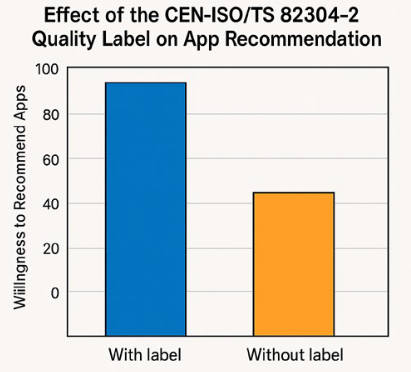
Results: Wellness apps demonstrate promising benefits in promoting physical activity, improving adherence to preventive behaviors, and supporting monitoring of key parameters such as hydration, blood pressure, sleep quality, and mobility. Studies on mHealth for venous leg ulcers show feasible patient engagement despite technological limitations. Research on app quality assessment reveals that many commercially available applications lack scientific validation, medical involvement, and quality assurance mechanisms. Importantly, a European experimental vignette study showed that the CEN-ISO/TS 82304-2 quality label significantly increases healthcare professionals’ willingness to recommend wellness apps to patients, irrespective of patient socioeconomic status or app category.
Conclusions: Wellness apps can complement clinical management of venous disorders, but their integration into practice requires robust quality evaluation frameworks. The adoption of the European quality label appears to enhance professional trust and could contribute to safer and broader clinical use. Future research should investigate long-term patient outcomes and the implementation of certified apps in vascular practices.
Keywords: wellness apps; venous disorders; chronic venous insufficiency; mobile health; CEN-ISO/TS 82304-2; quality label; self-management; e-Health.
INTRODUCTION
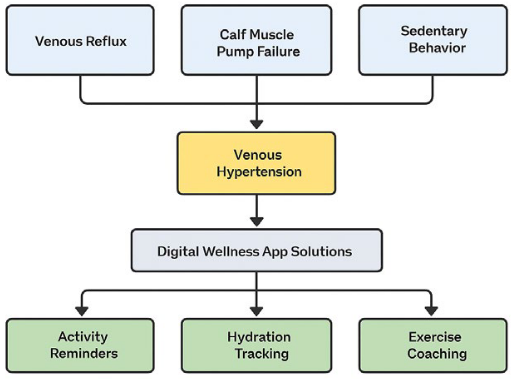
Chronic venous disease (CVD), including varicose veins and chronic venous insufficiency (CVI), represent one of the most common vascular conditions globally, affecting millions of individuals and contributing to significant morbidity, reduced mobility, and impaired quality of life. Their high prevalence— exacerbated by aging, sedentary lifestyles, and obesity—necessitates innovative strategies for prevention and self-management1-3. This highly prevalent condition is characterized by venous hypertension arising from valvular incompetence, venous reflux, obstruction, and impaired calf muscle pump function, leading to microcirculatory inflammation and progressive tissue damage. Epidemiological studies demonstrate that CVD affects up to one-third of adults, with symptoms ranging from pain and edema to skin changes and venous ulceration, contributing substantially to reduced mobility and diminished quality of life. Modern evaluation relies on CEAP classification and duplex ultrasonography, which together provide a structured assessment of disease severity and underlying mechanisms, forming the basis for individualized management strategies including lifestyle modification, compression therapy, and procedural interventions4-10.
Physical inactivity is recognized by the World Health Organization as a major global public health problem, contributing substantially to the rising burden of noncommunicable diseases worldwide. In its Global Action Plan for the Prevention and Control of NCDs 2013-2020, the WHO emphasizes that increasing physical activity through accessible, population-level interventions is essential for reducing cardiovascular and metabolic disease risk—an approach directly relevant to patients with chronic venous disorders, who often benefit from enhanced mobility and structured lifestyle support11-12.
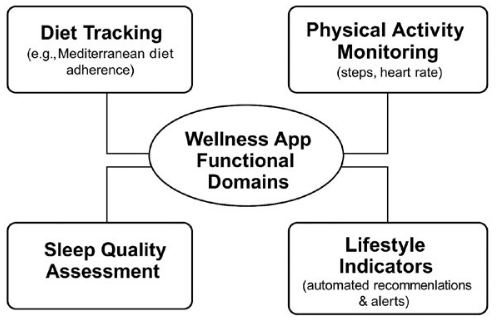
Digital health tools, and specifically wellness applications, have evolved rapidly over the last decade, becoming increasingly sophisticated in their ability to support personalized health management. These applications commonly integrate features such as guided physical activity programs, diet and hydration monitoring, sleep quality assessment, and continuous biometric tracking through connected wearables. By leveraging real-time data, behavior-change techniques, and automated feedback loops, wellness apps can deliver tailored recommendations that encourage healthier routines and sustained lifestyle modification. For patients with venous disorders, these capabilities are particularly relevant. Regular movement and structured activity reminders can help stimulate the calf muscle pump, a key driver of venous return, while tracking step counts and mobility patterns enables early identification of prolonged sedentary periods that contribute to venous stasis. Hydration and blood pressure monitoring may support maintenance of optimal blood rheology and vascular function, and sleep analytics can identify patterns associated with leg heaviness or nocturnal edema. Moreover, longitudinal biometric data—such as daily step trends, limb temperature, or changes in swelling—can assist in the early detection of deteriorating symptoms, prompting timely clinical evaluation. Collectively, digital wellness tools offer a promising adjunct to conventional venous disease management, helping patients adhere to preventive strategies and enabling clinicians to monitor functional progress between visits13-20.
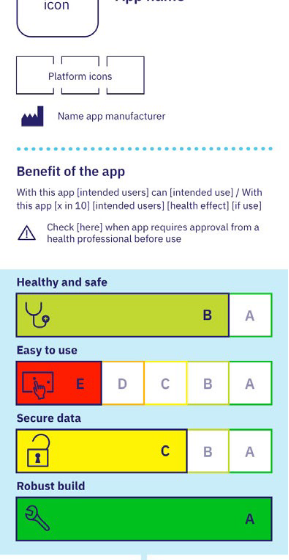
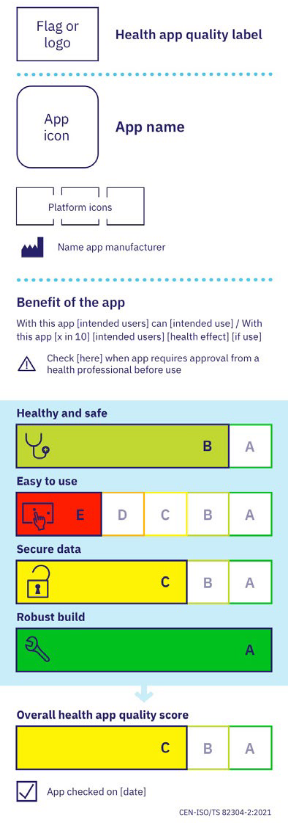
However, challenges persist: many apps lack scientific rigor, clinical involvement, long-term validation, or appropriate data protection frameworks21-25. Recognizing these challenges, the European Committee for Standardization (CEN) and the International Organization for Standardization (ISO) introduced the CEN-ISO/TS 82304-2 Technical Specification, a comprehensive framework designed to evaluate the quality, safety, reliability, and usability of health and wellness applications. This specification establishes a standardized, evidence-based scoring system and a consumer-facing quality label, enabling both clinicians and patients to quickly assess whether an app meets essential criteria for clinical robustness, data protection, and user experience. By defining transparent benchmarks across domains such as healthy and safe functioning, data security, ease of use, and technical robustness, the CEN-ISO/TS 823042 label aims to strengthen trust in digital health tools, facilitate professional recommendation, and support safer integration of wellness apps into routine clinical practice—including in fields such as phlebology, where digital self-management tools are becoming increasingly relevant.26-29.
This short review synthesizes current knowledge on wellness applications relevant to venous disease management and examines the potential impact of the new European quality label on their acceptance by healthcare professionals.
METHODS
A narrative literature review was conducted using evidence from: a) studies on wellness applications, wearable technology, and lifestyle monitoring13-15,19,20, b) clinical research on mHealth interventions for venous leg ulcers9,16, c) technology-assisted leg health monitoring17, d) reviews on mobile apps for varicose vein prevention and self-care18, e) research on barriers to health app recommendation and the impact of CEN-ISO/TS 82304-229. Full-text data, figures, and tables from the uploaded documents were integrated. The aim was descriptive synthesis rather than meta-analysis. A summary of evidence gathered is shown in Table 1.
Table 1. Summary of evidence from reviewed studies
| Study | Target
Population |
Intervention Type | Outcomes Measured | Key Results | Limitations |
| Laberiano et al. (18)
— Mobile application for the prevention and self-care of varicose veins |
Adults at risk of varicose veins | Mobile app prototype | Usability, acceptability, educational content | Prototype found intuitive and useful for self-care education | Prototype only, no clinical outcomes |
| Kelechi et al. (FOOTFIT) (16) — VLU
activity intervention |
Adults with venous leg ulcers | Wearable accelerometer + app | Adherence, step counts, feasibility | >85% adherence; mobile coaching feasible for older patients | Tech challenges; small sample |
| Sannino et al. (13-15)
— SmartHealth 2.0 wellness app |
Adults 18–65 | Comprehensive wellness app + wearables | MAI, TPA, TCI,
PSQI, Wellness Index |
Significant improvement in all wellness indices; high usability | Short-term, small cohort, selfreported data |
| Nguyen M. (17) — Wearable tech for venous health Vein doctor report | Individuals with venous insufficiency | Wearable sensors (compression, hydration, BP, gait) | Leg-health monitoring potential | Wearables provide comprehensive monitoring | Commentary only; no clinical trials |
| Higgins JP et al.
(19) — Smartphone Applications for Patients’ Health and Fitness |
General adult population using fitness/ wellness apps | Fitness, activity tracking, nutrition, lifestyle & wearableintegrated apps | App functionality, health behavior support | Demonstrates rapid growth of wellness & wearable-based apps; categorizes app types relevant for lifestyle modification | Not venousspecific; narrative review |
| Middelweerd et al. (20) — Apps to Promote Physical Activity | Adults using PA apps | Physical activity apps categorized by BCTs (tracking, goals, feedback, reminders, social features) | Behavior-change techniques; functionality analysis | PA apps widely use BCTs like feedback, self-
monitoring, goal setting; strength in promoting PA |
Not clinical; no disease-specific data; no longterm outcomes |
| Biliunaite et al. (29)
— CEN-ISO/TS 82304- 2 Quality Label Study |
European healthcare professionals | Vignette-based evaluation | Willingness to recommend; APEASE domains | Quality label significantly increases recommendation likelihood | Hypothetical scenarios; moderate sample |
List of abbreviations:
MAI – Mediterranean Adequacy Index
TPA – Time spent per week on Physical Activity Index TCI – Target Calorie Index
PSQI – Pittsburgh Sleep Quality Index VLU – Venous Leg Ulcer
CVI – Chronic Venous Insufficiency PA – Physical Activity
BCT – Behavior Change Technique mHealth – Mobile Health
HCP – Healthcare Professional EHR – Electronic Health Record
CEAP – Clinical, Etiological, Anatomical, Pathophysiological (classification of chronic venous disease) ISO – International Organization for Standardization
CEN – European Committee for Standardization
QoL – Quality of Life
RCT – Randomized Controlled Trial
APEASE – Acceptability, Practicability, Effectiveness, Affordability, Side-effects, Equity (evaluation criteria)
RESULTS
Wellness apps for venous disease prevention and self-care
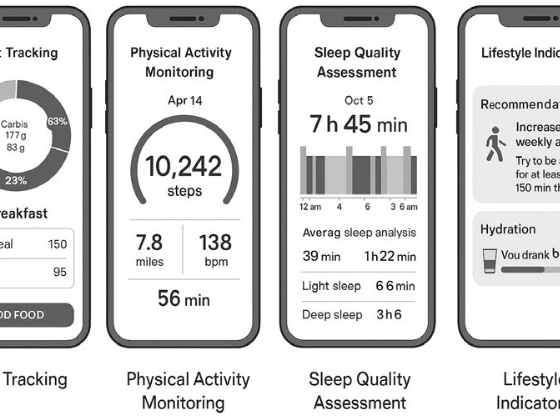
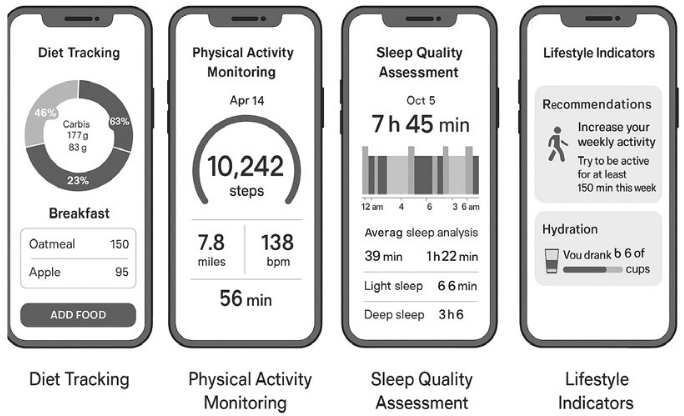
Several studies highlight the clinical relevance of mobile applications designed to improve lower-limb health and prevent venous stasis. Laberiano et al. describe the development of a mobile prototype for varicose vein prevention using design thinking. Patients valued educational content, exercise reminders, and monitoring tools. Wellness apps can encourage daily physical activity, improve adherence to compression therapy, and support early identification of symptoms (Figures 2,3). These findings align with the documented role of physical activity in reducing venous hypertension and improving microvascular perfusion18.
Wearable technologies supporting venous health
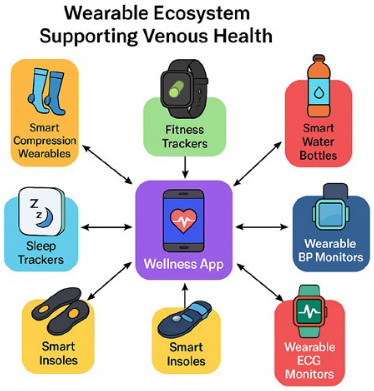
A wide range of wearable technologies now complement wellness apps. Fitness trackers monitor steps, heart rate, and activity levels—are promising key elements in venous return enhancement. Smart compression wearables adjust pressure dynamically, optimizing blood flow, smart hydration devices prevent dehydration, which can increase blood viscosity, whereas wearable blood pressure monitors, smart insoles, echocardiogram (ECG) devices, and sleep monitors provide additional data relevant to venous function (Figure 4). These technologies support a holistic wellness ecosystem, particularly valuable for patients with early venous symptoms or at high vascular risk17.
Health Applications for venous leg ulcers (VLU)
Evidence from the randomized controlled trial FOOTFIT shows high adherence (>85%) to short daily conditioning exercises tracked via an accelerometer-linked mobile app. Patients reported usability challenges with older technology, yet overall engagement was positive. The intervention demonstrates that mHealth can feasibly assist VLU patients, many of whom are elderly or have limited mobility. This underscores the importance of usability, interface quality, and updated sensor integration16.
Evidence-based wellness app development
The Wellness app studied by Sannino et al. integrates diet tracking and mediterranean diet adherence scoring (MAI), physical activity monitoring (steps, distance, heart rate), sleep quality assessment (PSQI), automated personalized recommendations and behavior change techniques (n=9) embedded into the app design. Pilot studies demonstrated significant improvements in wellness indices and high user satisfaction13-15.
Lack of scientific validation in commercial apps
Consistent across multiple analyses is the finding that most available wellness apps lack medical involvement. Standardized effectiveness data are rare and only few apps undergo long-term or heterogeneous population testing, while data privacy and security features vary widely. This validates the need for systematic quality assessment frameworks.
The European quality label (CEN-ISO/TS 82304-2)
The recent vignette-based study by Biliunaite et al. provides the strongest evidence to date that the presence of the label (Figure 5) significantly increases healthcare professionals’ willingness to recommend apps. This effect is stable across app type (prevention, self-management, clinical support) and
Table 2. Structure and scoring domains of the CEN-ISO/TS 82304-2 quality label
| Category | Weight
(%) |
Criteria (Summary) Examples Relevant to Vascular / Wellness Apps |
| Healthy & Safe | 50% | • Clinical safety assurance • App provides evidence-based recommendations for
• Risk management and hazard improving venous return (e.g., activity promotion, calfmitigation pump exercises) • Evidence supporting claimed benefits • Includes warnings for patients with acute DVT or severe • Clear contraindications edema • Appropriate onboarding and safety • Provides safe-use guidance for compression wearables warnings • Includes validated algorithms for monitoring steps or mobility in CVI patients |
| Easy to
Use |
15% | • Usability testing • Simple interface for logging symptoms (leg heaviness,
• Accessibility compliance swelling) • Clear navigation and language • Clear icons for hydration, sleep, or activity tracking • Minimal cognitive burden • Large-text mode for older adults with venous disease • Quick-start tutorials for first-time users (common in CVI management apps) |
| Secure Data | 25% | • GDPR compliance • Secure transmission of heart rate, BP, step count, gait metrics
• Encryption of data at rest & in transit • Clear permission settings for sharing data with vascular • Transparent data-processing policies specialists • User control over data sharing and • Data-minimization for sensitive health metrics (e.g., ulcer deletion photos, inflammation readings) • Automatic anonymization for research use |
| Robust Build | 10% | • App performance, uptime, and • Reliable pairing with smart compression devices stability • Stable syncing with wearables (step counters, hydration
• Interoperability with devices or EHRs sensors, smart insoles) • Responsiveness and bug-free • Works ofline for patients with poor connectivity operation • Regular updates incorporating new venous-care guidelines • Long-term maintenance and updates |
List of abbreviations:
ISO – International Organization for Standardization CEN – European Committee for Standardization GDPR – General Data Protection Regulation
BP – Blood Pressure
CVI – Chronic Venous Insufficiency EHR – Electronic Health Record DVT – Deep Vein Thrombosis
DISCUSSION
Wellness apps represent a promising adjunct in the prevention and self-management of venous disorders, offering digital support that can complement traditional clinical care. Their potential benefits extend across several dimensions of venous health: (a) encouraging regular mobility and reducing sedentary behavior, thereby stimulating the calf muscle pump and improving venous return; (b) supporting adherence to compression therapy through reminders, tracking tools, and education on correct use; (c) enhancing patient education and autonomy by providing accessible information on risk factors, symptom monitoring, and lifestyle modification; (d) enabling real-time data collection—such as step counts, hydration levels, sleep quality, or limb temperature—which may facilitate early detection of deteriorating symptoms like edema, increasing pain, or reduced mobility; and (e) integrating wearable technology to provide comprehensive, continuous physiological monitoring relevant to venous function. Despite these advantages, several challenges limit widespread adoption. Usability issues—particularly among older adults or those with limited digital literacy—can hinder engagement, while the lack of clinical validation raises concerns about the reliability and accuracy of app-generated recommendations. Long-term adherence remains difficult to achieve, and variability in data security practices across commercially available apps introduces significant privacy and safety risks. This heterogeneity in app quality underscores the need for structured oversight.
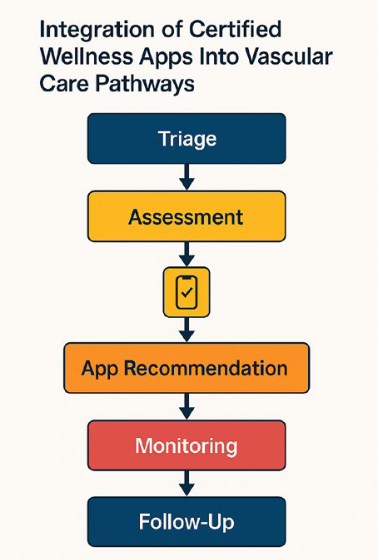
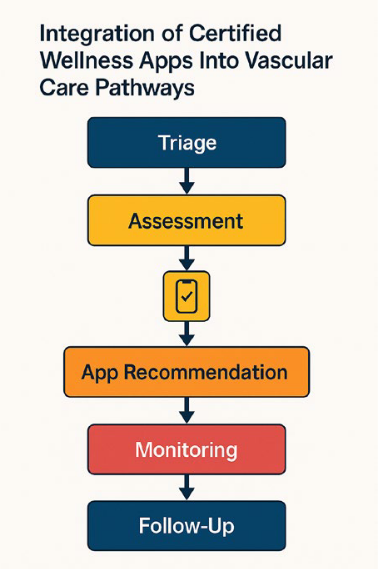
The CEN-ISO/TS 82304-2 quality label helps address these gaps by providing a standardized, transparent mechanism for evaluating the safety, reliability, usability, and data protection practices of health and wellness applications. Evidence demonstrates that the presence of this quality label increases healthcare professionals’ willingness to recommend digital tools—an essential step toward integrating certified wellness apps into vascular clinical pathways and improving patient trust. Future directions should include longitudinal clinical trials assessing the impact of certified wellness apps on venous disease progression, recurrence, and patient-reported outcomes; integration of app-based monitoring into European vascular care pathways; the creation of venous disease-specific quality criteria within the ISO framework (e.g., compression adherence, ulcer photography quality, mobility metrics); and the strengthening of multidisciplinary collaboration among vascular surgeons, digital health specialists, behavioral scientists, and patient organizations to ensure real-world feasibility and adoption (Figure 7).
CONCLUSIONS
The expanding digital ecosystem of wellness applications and wearable technologies has created new possibilities for supporting patients with venous disorders, yet their meaningful clinical integration depends on the availability of trustworthy, clinically sound tools. The CEN-ISO/TS 82304-2 quality label provides a structured mechanism to distinguish reliable applications from the broader digital market, offering a foundation for safer and more consistent adoption in vascular practice. Moving forward, coordinated efforts across clinical, technological, and regulatory domains are essential to translate these digital innovations into measurable improvements in venous care. Robust clinical trials, implementation studies, and targeted quality frameworks will be critical to ensure that certified digital tools can be effectively embedded within everyday phlebology workflows (Table 3) and deliver sustained value to patients and clinicians alike.
Table 3. Gaps in current evidence and priorities for future research
| Research Gap | Current Evidence | Future Research Priority |
| Lack of long-term clinical outcomes | Studies focus on short-term usability; few Longitudinal trials assessing CEAP changes, ulcer measure venous disease progression. recurrence, edema, and QoL. | |
| No venous-specific app certification | ISO 82304-2 is general; no criteria tailored Develop vascular-focused certification standards
to venous care needs. (compression, ulcer care, calf pump metrics). |
|
| Poor integration with clinical systems (EHRs) | Apps operate independently; data not shared with vascular clinics. | Build interoperable systems allowing automatic
data transfer into EHRs. |
| Unknown effect on ulcer
healing or recurrence |
FOOTFIT improves activity but does not
study wound outcomes. |
Test digital ulcer monitoring tools in RCTs to
evaluate healing/recurrence. |
| Usability issues in older or Older VLU patients report tech difficulties; low-literacy patients training is often needed. | Co-design apps with elderly patients; simplify
interfaces; add voice or auto-sync features. |
|
| Wearable metrics lack validation for venous physiology | Devices measure steps, hydration, pressure—but are rarely validated in venous patients. | Validate venous-specific wearable metrics (edema, calf pump surrogates, compression pressure). |
| Limited real-world evidence Vignette study shows increased willingness on ISO quality label impact to recommend—but only in scenarios. | Conduct implementation trials in vascular practices to measure adoption and outcomes. | |
| Data security concerns for Apps vary widely in privacy standards; ulcer Develop venous-care-specific GDPR protocols; sensitive venous data photos and symptom logs may be insecure. perform security testing. | ||
List of abbreviations:
CVD – Chronic Venous Disease
CVI – Chronic Venous Insufficiency VLU – Venous Leg Ulcer
EHR – Electronic Health Record RCT – Randomized Controlled Trial QoL – Quality of Life
GDPR – General Data Protection Regulation
ISO – International Organization for Standardization CEN – European Committee for Standardization
REFERENCES
- Evans CJ, Fowkes FG, Ruckley CV, Lee Prevalence of varicose veins and chronic venous insufficiency in men and women in the general population: Edinburgh Vein Study. J Epidemiol Community Health. 1999 Mar;53(3):149-53. doi: 10.1136/jech.53.3.149.
- Wu NC, Chen ZC, Feng IJ, Ho CH, Chiang CY, Wang JJ, et Severe varicose veins and the risk of mortality: a nationwide population-based cohort study. BMJ Open. 2020 Jun 21;10(6):e034245. doi: 10.1136/bmjopen-2019-034245.
- Alsaigh T, Fukaya E. Varicose Veins and Chronic Venous Disease. Cardiol Clin. 2021 Nov;39(4):567-581. doi: 1016/j.ccl.2021.06.009.
- Eberhardt RT, Raffetto JD. Chronic venous insufficiency. Circulation. 2014 Jul 22;130(4):333-46. doi: 1161/CIRCULATIONAHA.113.006898.
- Rabe E, Pannier F. Clinical, aetiological, anatomical and pathological classification (CEAP): gold standard and Phlebology. 2012 Mar;27 Suppl 1:114-8. doi: 10.1258/ phleb.2012.012s19.
- Nicolaides AN; Cardiovascular Disease Educational and Research Trust; European Society of Vascular Surgery;, The International Angiology Scientific Activity Congress Organization; International Union of Angiology; Union Internationale de Phlebologie at the Abbaye des Vaux de Cernay. Investigation of chronic venous insufficiency: A consensus statement (France, March 5-9, 1997). Circulation. 2000 Nov 14;102(20):E126-63. doi: 10.1161/01. cir.102.20.e126.
- Gloviczki P, Comerota AJ, Dalsing MC, Eklof BG, Gillespie DL, Gloviczki ML, et al; Society for Vascular Surgery; American Venous Forum. The care of patients with varicose veins and associated chronic venous diseases: clinical practice guidelines of the Society for Vascular Surgery and the American Venous Forum. J Vasc Surg. 2011 May;53(5 Suppl):2S-48S. doi: 10.1016/j.jvs.2011.01.079.
- Mok Y, Ishigami J, Sang Y, Kucharska-Newton AM, Salameh M, Schrack JA, et al. Clinically Recognized Varicose Veins and Physical Function in Older Individuals: The ARIC J Gerontol A Biol Sci Med Sci. 2022 Aug 12;77(8):16371643. doi: 10.1093/gerona/glab287.
- Kelechi TJ, Prentice MA, Mueller M, Madisetti M, Vertegel A. A Lower Leg Physical Activity Intervention for Individuals With Chronic Venous Leg Ulcers: Randomized Controlled Trial. JMIR Mhealth Uhealth. 2020 May 15;8(5):e15015. doi: 10.2196/15015.
- Alsharif AT, Alanazi OI, Alqarni RA, Alahmadi HO, Alassiri LA, Alamri SA, et al. The Impact of Nutritional Condition and Compression Treatment on Venous Ulcer Recovery: A Systematic Review. Cureus. 2024 Apr 1;16(4):e57407. doi: 10.7759/cureus.57407. Erratum in: Cureus. 2025 Aug 26;17(8):c263. doi: 10.7759/cureus.c263.
- World Health Organization. Physical Inactivity: A Global Public Health Problem. World Health Organization: Washington, DC, USA, 2014.
- World Health Global action plan for the prevention and control of noncommunicable diseases 20132020.World Health Organization: Washington, DC, USA, 2013.
- Sannino G, Forastiere M, De Pietro G. A Wellness Mobile Application for Smart Health: Pilot Study Design and Results. Sensors (Basel). 2017 Mar 17;17(3):611. doi: 3390/s17030611.
- Forastiere M, de Pietro G, Sannino An mHealth application for a personalized monitoring of one’s own wellness: Design and development. In Innovation in Medicine and Healthcare 2016; Springer: Cham, Switzerland, 2016; pp. 269-278.
- Smart Health 0. 2014. Available online: http://www.smarthealth2.com/ (accessed on 21 November 2025).
- Kelechi TJ, Madisetti M, Prentice M, Mueller M. FOOTFIT Physical Activity mHealth Intervention for Minimally Ambulatory Individuals With Venous Leg Ulcers: A Randomized Controlled Trial. J Wound Ostomy Continence Nurs. 2020 Mar/Apr;47(2):173-181. doi: 10.1097/ 0000000000000631.
- Nguyen, M. Tech to Monitor Leg Health: Insights from Your Vein Vein Doctor for Women. 2023; Available at: https://www.veindoctor.com (accessed on 21 November 2025).
- Laberiano AA, Giraldo Retuerto M, Yactayo-Arias C. Mobile application for the prevention and self-care of varicose veins. IJECE. 2024:14(6):6560-6571. https://doi. org/10.11591/ijece.v14i6.pp6560-6571.
- Higgins JP. Smartphone Applications for Patients’ Health and Fitness. Am J Med. 2016 Jan;129(1):11-9. doi: 10.1016/j.amjmed.2015.05.038. Epub 2015 Jun 17.
- Middelweerd A, Mollee JS, van der Wal CN, Brug J, Te Velde SJ. Apps to promote physical activity among adults: a review and content analysis. Int J Behav Nutr Phys Act.2014 Jul 25;11:97. doi: 10.1186/s12966-014-0097-9.
- Dahlhausen F, Zinner M, Bieske L, Ehlers JP, Boehme P, Fehring L. Physicians’ Attitudes Toward Prescribable mHealth Apps and Implications for Adoption in Germany: Mixed Methods Study. JMIR Mhealth Uhealth. 2021 Nov 23;9(11):e33012. doi: 10.2196/33012.
- Boulos MN, Brewer AC, Karimkhani C, Buller DB, Dellavalle Mobile medical and health apps: state of the art, concerns, regulatory control and certification. Online J Public Health Inform. 2014 Feb 5;5(3):229. doi: 10.5210/ ojphi.v5i3.4814.
- Byambasuren O, Sanders S, Beller E, Glasziou Prescribable mHealth apps identified from an overview of systematic reviews. NPJ Digit Med. 2018 May 9;1:12. doi: 10.1038/s41746-018-0021-9.
- Byambasuren O, Beller E, Glasziou P. Current Knowledge and Adoption of Mobile Health Apps Among Australian General Practitioners: Survey Study. JMIR Mhealth Uhealth. 2019 Jun 3;7(6):e13199. doi: 10.2196/13199.
- Berkowitz CM, Zullig LL, Koontz BF, Smith SK. Prescribing an App? Oncology Providers’ Views on Mobile Health Apps for Cancer Care. JCO Clin Cancer Inform. 2017 Nov;1:1-7. doi: 10.1200/CCI.17.00107.
- Eysenbach G; CONSORT-EHEALTH CONSORT-EHEALTH: improving and standardizing evaluation reports of Web-based and mobile health interventions. J Med Internet Res. 2011 Dec 31;13(4):e126. doi: 10.2196/ jmir.1923.
- McCay C. Setting Standards: Initiative to Define Quality and Reliability Requirements for Health and Wellness Apps. Biomed Instrum 2020 Mar/Apr;54(2):143-doi: 10.2345/0899-8205-54.2.143.
- ISO/TS 82304-2:2021, Health software — Part 2: Health and wellness apps — Quality and International Organization for Standardization (ISO). Available online at: https://www.iso.org/obp/ui/en/#iso:std:iso:ts:82304:- 2:ed-1:v1:en (accessed on 21 November 2025).
- Biliunaite I, van Gestel L, Hoogendoorn P, Adriaanse Value of a quality label and European healthcare professionals’ willingness to recommend health apps: An experimental vignette study. J Health Psychol. 2025 May;30(6):12781290. doi: 10.1177/13591053241258205. Epub 2024 Aug
- PMID: 39096027; PMCID: PMC12052922.